
Slack Tide
Notes from Millennial Midlife, Without the Crisis, Part 2

“Nature knows that people are a tide that swells and in time will ebb, and all their works dissolve ... As for us: We must uncenter our minds from ourselves. We must unhumanize our views a little and become confident as the rock and ocean that we are made from.”
- Robinson Jeffers
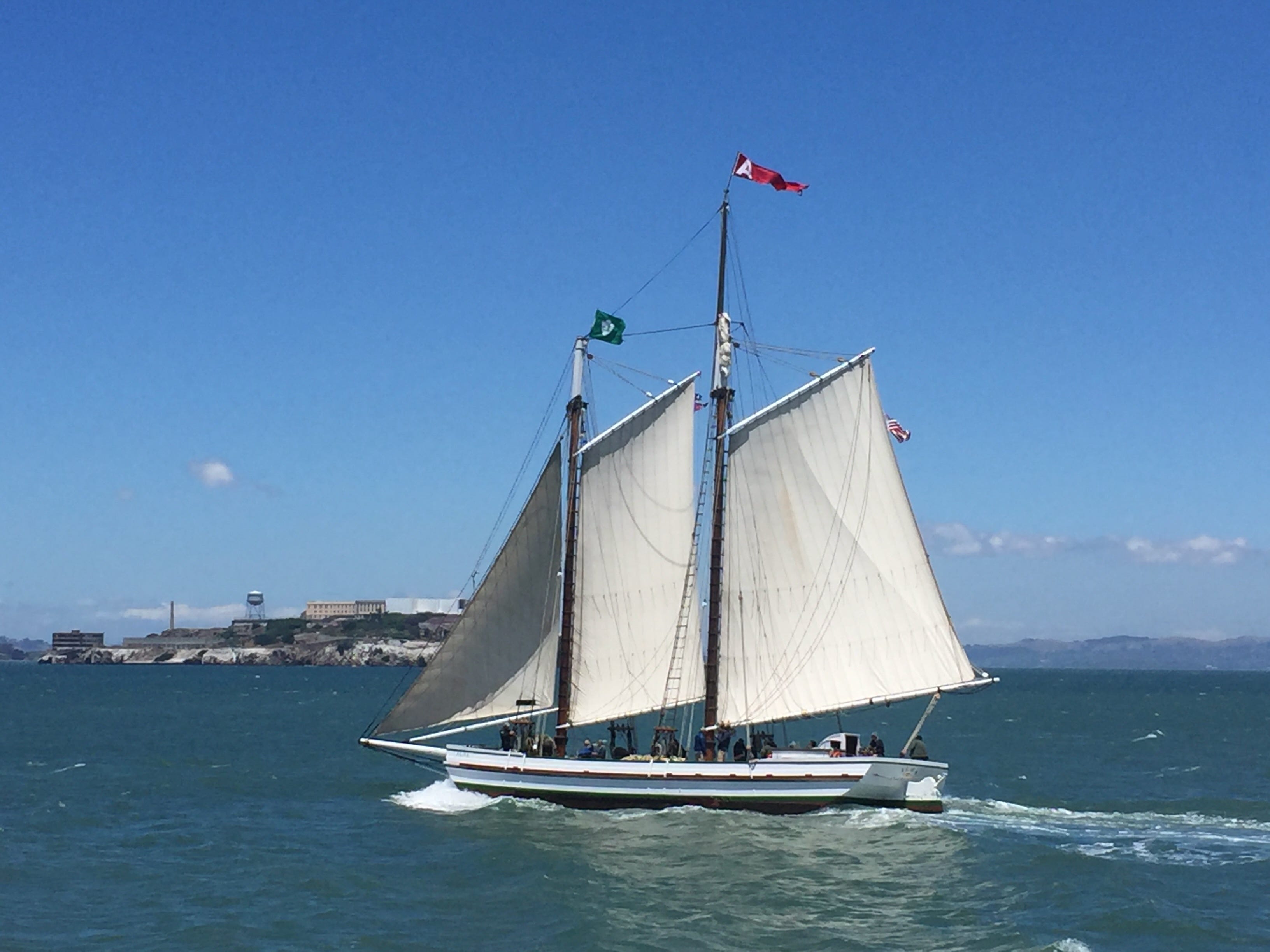
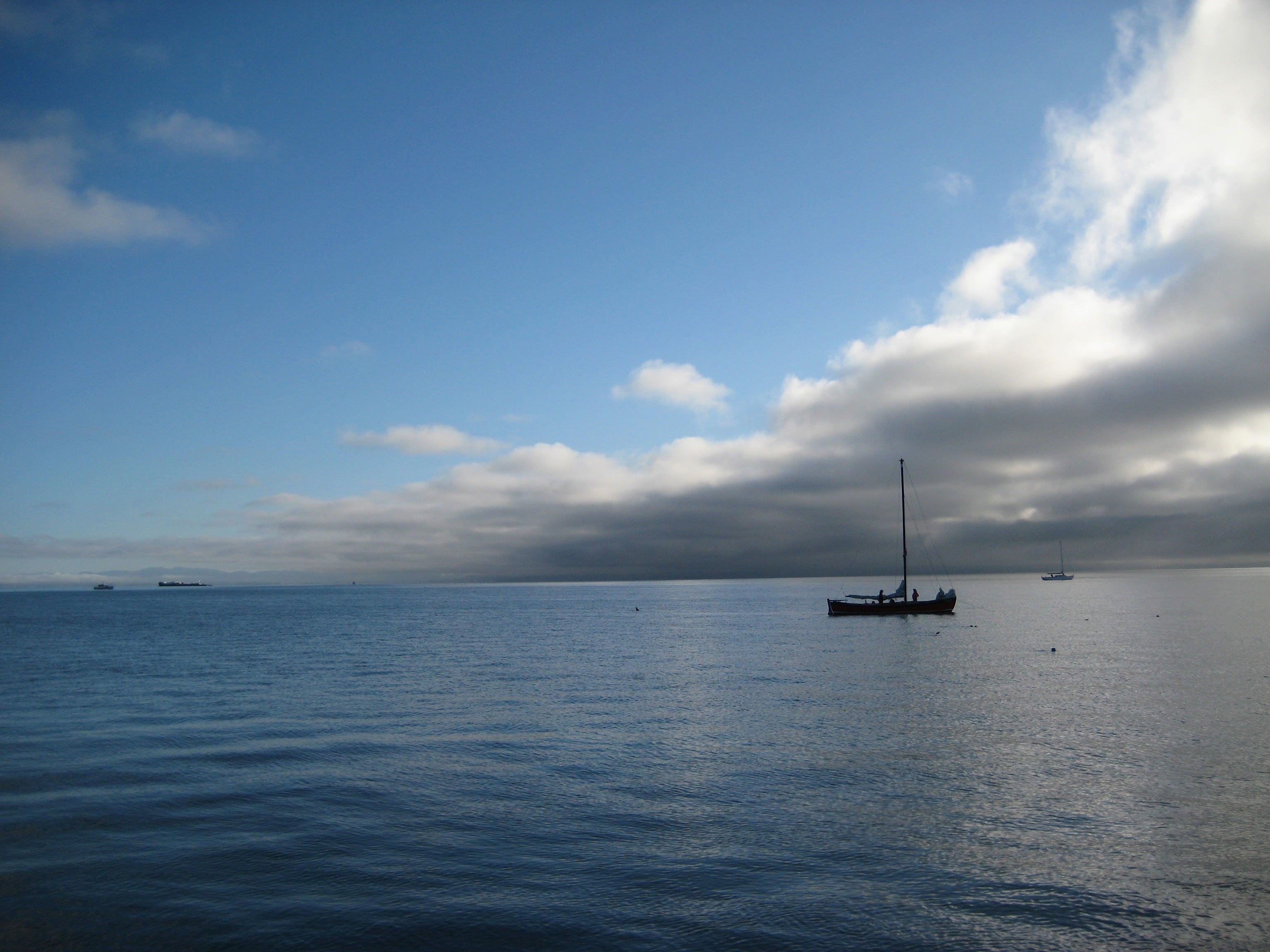
We left the San Francisco Bay chop behind us somewhere past Richmond. The Alma settling into it, eighty feet of 1891 Douglas fir finding her hay-boat rhythm. The kind of unhurried journey she was built for. I was in my mid twenties, a deckhand, doing what deckhands do, which is mostly watch and wait and haul when told to. The wind that had been snapping the halyards all morning let go of us there. The water went from slate to brown. Stillness settling in on San Pablo Bay.
We passed the old wine warehouse first. Boarded up since Prohibition, its leaning gray lacework pilings. The prow of a massive metal sunken boat that once was tied up along the docks. It could have been the Jersey waterfront I grew up looking at from the wrong side of a chain-link fence. Rust and abandonment look the same everywhere, I think. It’s the only truly universal architecture.
Then the island of rocks and cormorants. Then the lighthouse. Then, coming around the point, China Camp.
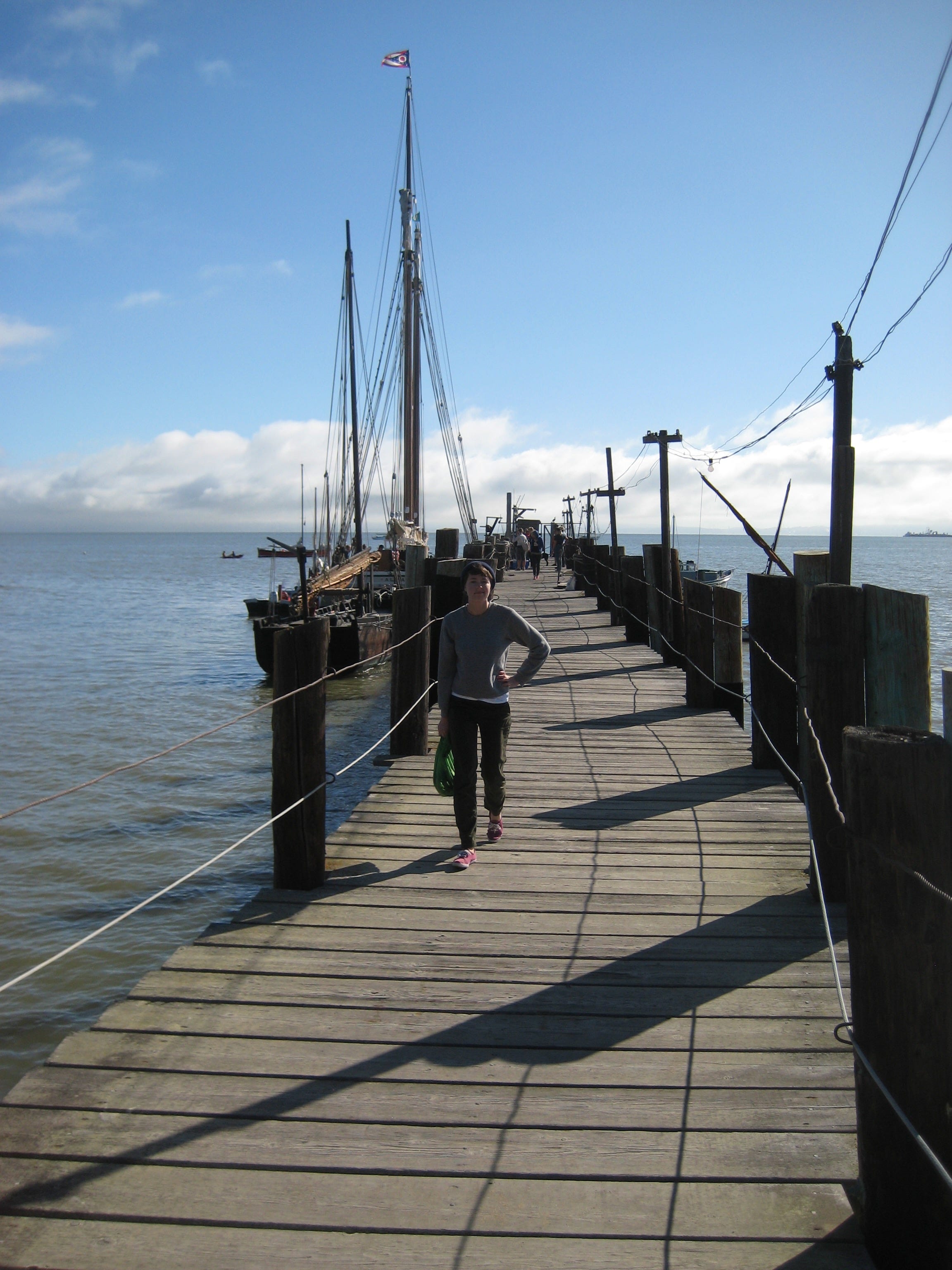
You see it before you understand it. A dock that isn’t so much built as accumulated, planks added by whoever needed one more foot of dock that year, no permit, no plan, tied off wherever a piling would take a line. Shacks that the state now calls historic and preserves accordingly. Boats anchored out in the shallows, painted the colors of whatever paint somebody had left over, still shrimping water that hadn’t held a real quantity of shrimp in years. Nobody had told them to stop. Or maybe they had, and this was the answer.
We rode the high tide in, because you have to, the Alma draws almost nothing, flat-bottomed, built to lie up on mud and wait for the water to come back and get her. We tied off with two feet of water under the keel. I remember doing the math in my head, the tide charts, the six hours we had before we’d be sitting in it, and something in me relaxed the way it does when a plan actually accounts for the ground beneath it.
I looked over San Pablo Bay. The golden hills across toward Napa. The water dark and opaque. The emerald green sky and the sherbet pink clouds streaking across it. Slack tide. I climbed off Alma onto that slapdash dock. The ground felt like the water, landsick. I stumbled towards the cluster of structures on shore.
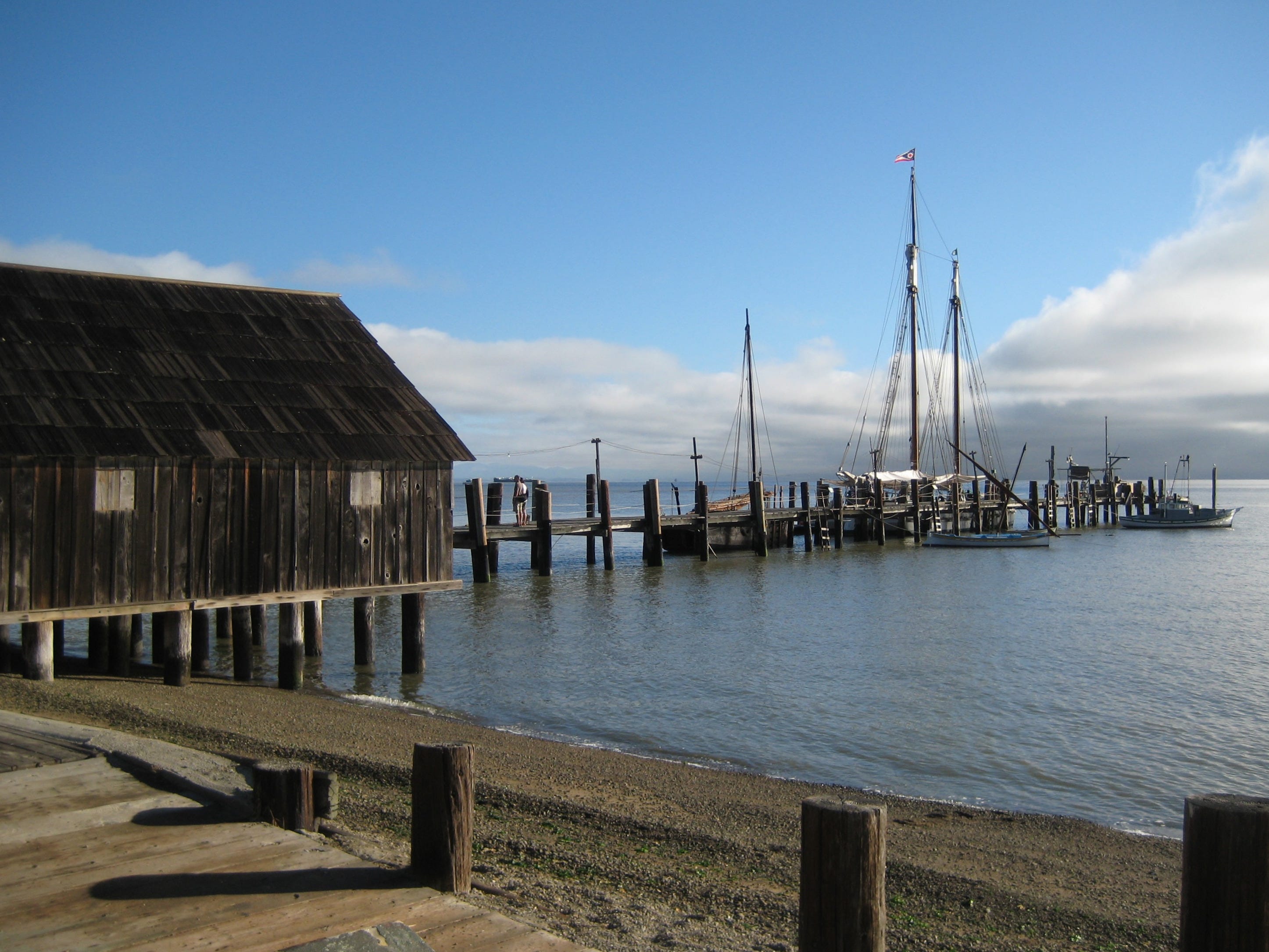
I was there for the Heritage Day festival, Chinese-Americans gathering on the site of a shrimping village that survived the Exclusion Act by disappearing into a place nobody with money wanted. I gave tours on the Alma, saying words I’d memorized about hay and commerce and sail. Down the shoreline, Grace Quan rode at anchor, a San Francisco Bay shrimping junk a boat builder I knew had built plank by plank with his own hands, a replica of something that used to work these waters for real.
Frank Quan was the real deal. The boat was named after his mother. Frank grew up at China Camp. Son of Italian and Chinese parents. He still fished the bay like they did when it was a working town. He lived in the only habitable structure on the beach, an old houseboat that had been dragged up on shore before Frank could remember. His garden surrounded the house, a driftwood fence guarded against the browsing deer. There was no one like Frank. He was from another time all together. His cracked hands, tanned wrinkled face. They were a part of China Camp just as much as all the other fixtures.
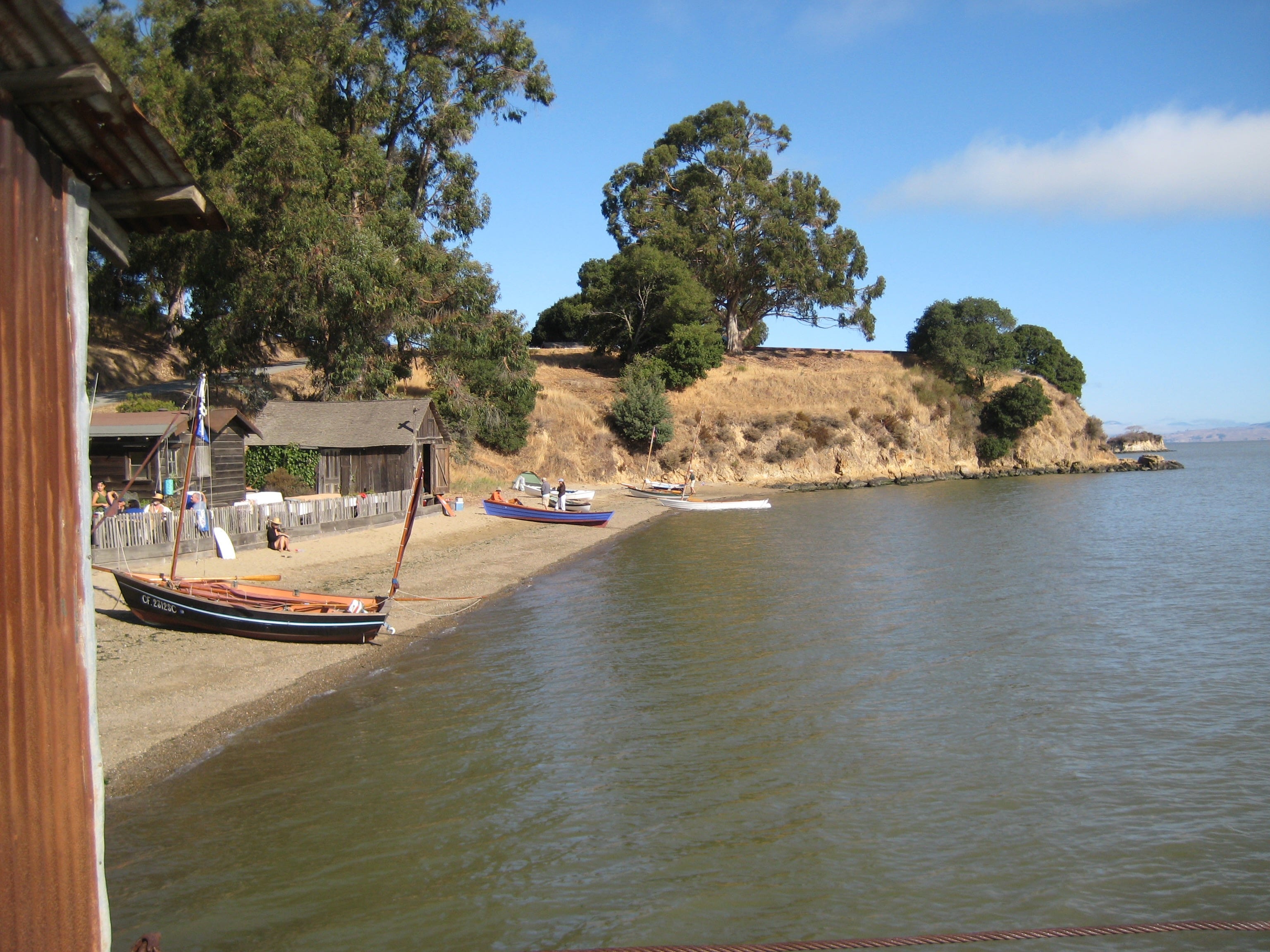
I went back more times than I can count after that. Not for the festival. For the place.
It wasn’t polished. That’s what I keep returning to when I try to say what it was. Everything at China Camp had been made by somebody, for a reason, with whatever was on hand, and none of it apologized for showing the seams. I’d spent my whole childhood watching men in New Jersey drive to jobs that made things smooth and finished and identical, and here was a village built entirely out of not doing that.
I tried to get back once under my own sail. I took my own boat out with some friends for a work weekend and somewhere off Raccoon Strait the water started coming in through the wooden hull faster than I liked. Fast enough that math stopped being interesting and became urgent. We turned around. Made it back low in the water, pumps going, to the houseboat commune at Galilee Harbor, and I remember standing on the dock afterward shaking, catching my breath. That one didn’t get to China Camp. But it taught me something about what I was willing to risk to keep going back.
I didn’t have language yet for what I was chasing out there. I just knew that the city made things smooth in a way that scared me more than daylight through dried planks did.
Back in the city, many years later, there were dinner parties. My roommate’s friends mostly, crowded around a long farm table in an old Victorian flat in Hayes Valley, wine going around, people doing well by any measure, gallery shows, book deals, the kind of success I told myself I wanted. I’d try to steer things toward the work itself, what someone was actually making. Mostly what came back was who’d been spotted at the new restaurant, who was showing where. I’d sit there and feel myself drifting back across the bay, wishing I were asking Frank Quan about abalone and tide tables instead.
Jung said life begins at forty. I used to think that was just a nice line. I understand it more literally now, the first half runs on hunger, for wanting more, for going further, for whoever’s boat is bigger down the dock, and you don’t notice you’re hungry, you just keep rowing. The second half asks a quieter question. Not more of what. Just: is this actually mine.
The oven at Salmon Creek Farm is cob, built into the hillside, sitting just below the garden and the orchard, next to the outdoor kitchen. Wood-fired. I light it three hours before anyone’s hungry. Small fire first, kindling and split oak, let it burn down to coals. Then more oak on top of that, let it burn down again, building the heat into the cob itself so it’ll hold through a whole night. I lay the wood the way Frank taught me to lay coals for spare ribs on that beach at China Camp, years before I knew this garden existed, before I had any idea I’d end up here. Not stoking a big flame. Creating enough embers that the heat lasts all night.
The people around the oven most nights are folks I’ve known a week, sometimes less. People passing through on their way to somewhere else, the way I always used to be the one passing through. The land is the only thing that stays. I’ve started to notice I don’t mind that anymore — the faces changing, the land constant underneath them — the way I used to need to know I’d see someone again before I let myself care about them.
There’s an apple tree in the garden above the oven, planted long before I got here, bearing fruit that has nothing to do with any tree I planted or any orchard I designed. It just answers the ground it’s in. The fog it gets, the wind off the coast, the particular cold that comes from the ocean at night. I want to be like that. Not something I built and am still steering from a distance, the way I steered the shop, the way I still catch myself steering things. I want to be something rooted long enough that whatever grows out of me stops being mine and starts being this place’s. Salt air and redwood and cold Pacific fog, fruiting through me instead of the other way around. The way Frank was China Camp, right down to his cracked hands.
One night making pizza a conversation started to go deep, the way they sometimes do with someone you’ll only know a week. Then it drifted, a name here, a name there, someone asking who else had come through the farm, who was worth knowing. I didn’t say anything. I put another log on the fire and listened to the fox in the distance.
Love this. Maybe growing from the ground is the way to revitalize the Underground. Artists used to not care about mainstream success.