
Fallow
My Life Between Creative Seasons

As for me, I delight in the every day Way
Among mist-wrapped vines and rocky caves
Here in the wilderness I am completely free
With my friends, the white clouds, idling forever
There are roads, but they do not reach the world
Since I am mindless, who can rouse my thoughts
On a bed of stone I sit, alone in the night
While a round moon climbs up Cold Mountain
-Han Shan, 730–850 CE
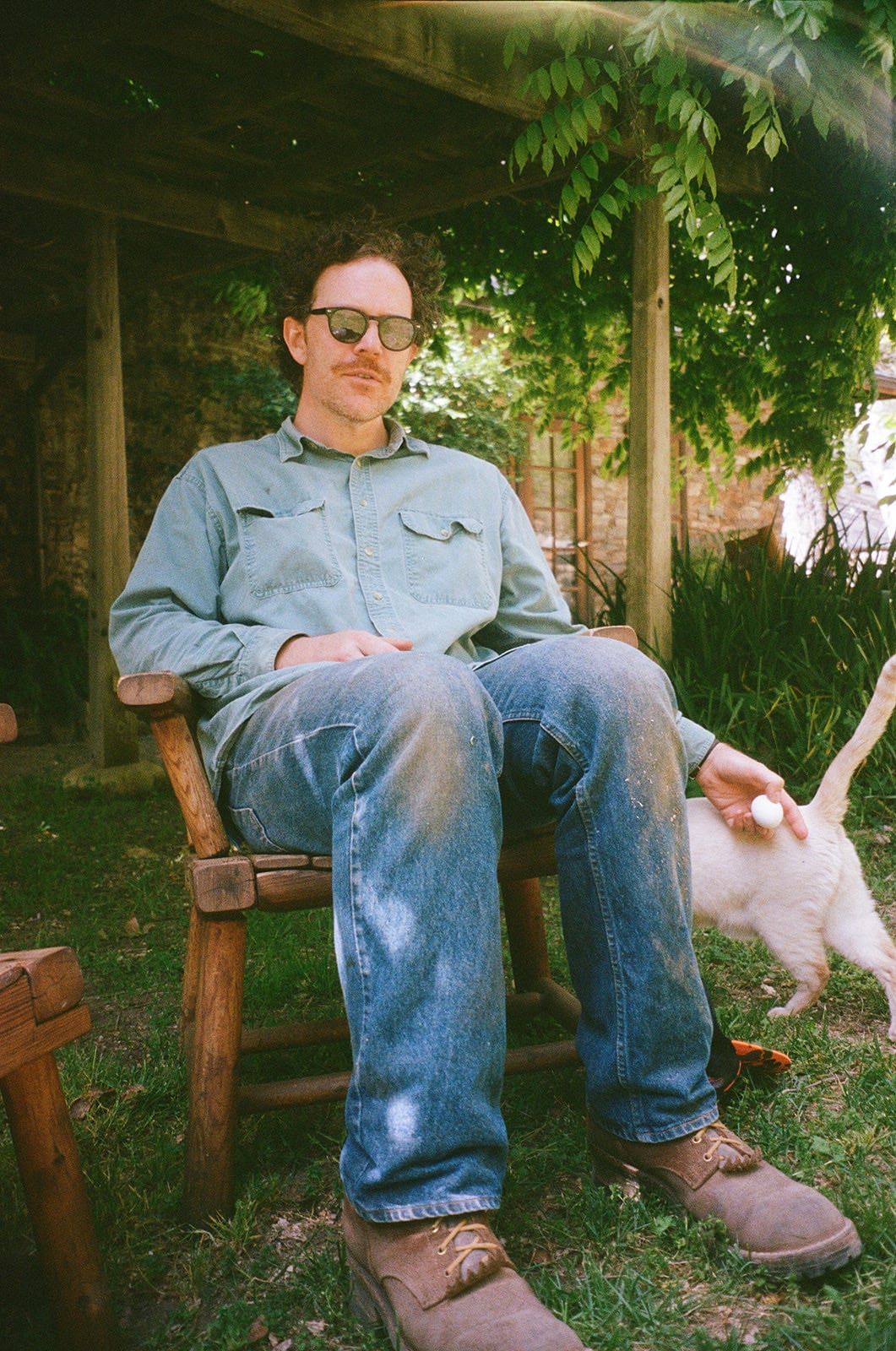
In the morning here on Albion Ridge the early spring fog pulls back to the ocean like the land getting out of bed. As the morning sun starts warming the redwoods the bark starts steaming. I can hear the waves roll up the valley from the mouth of Salmon Creek. Standing here in the garden I can see the snail trails on the logs left by nightly intruders. The dew clings to the grass, verdant new lettuces, the abundant ground cherries, and the fava plants. The favas have just started flowering and are already several feet tall. In the early winter they were planted. Not only for food, but to give nutrients back into the soil.
The fava flowers are white with a bit of purple on them. At some point I will turn some of these plants into the soil. I’m not looking forward to it, but I know it’s necessary. The dirt caked into my overalls will be worth it for the healthy summer crops. For now, it’s nice to see this pale green miniature forest.
When I was living on the Holy Family, the fishing boat made houseboat from 1926, the mornings were much the same. The fog would roll back off Richardson Bay. The sun would warm the wood on the docks. The seagulls would argue with each other over scraps. The forests there were boat masts. The view was blue with the gemmed sparkle of light off the wind crests in the middle of the bay.
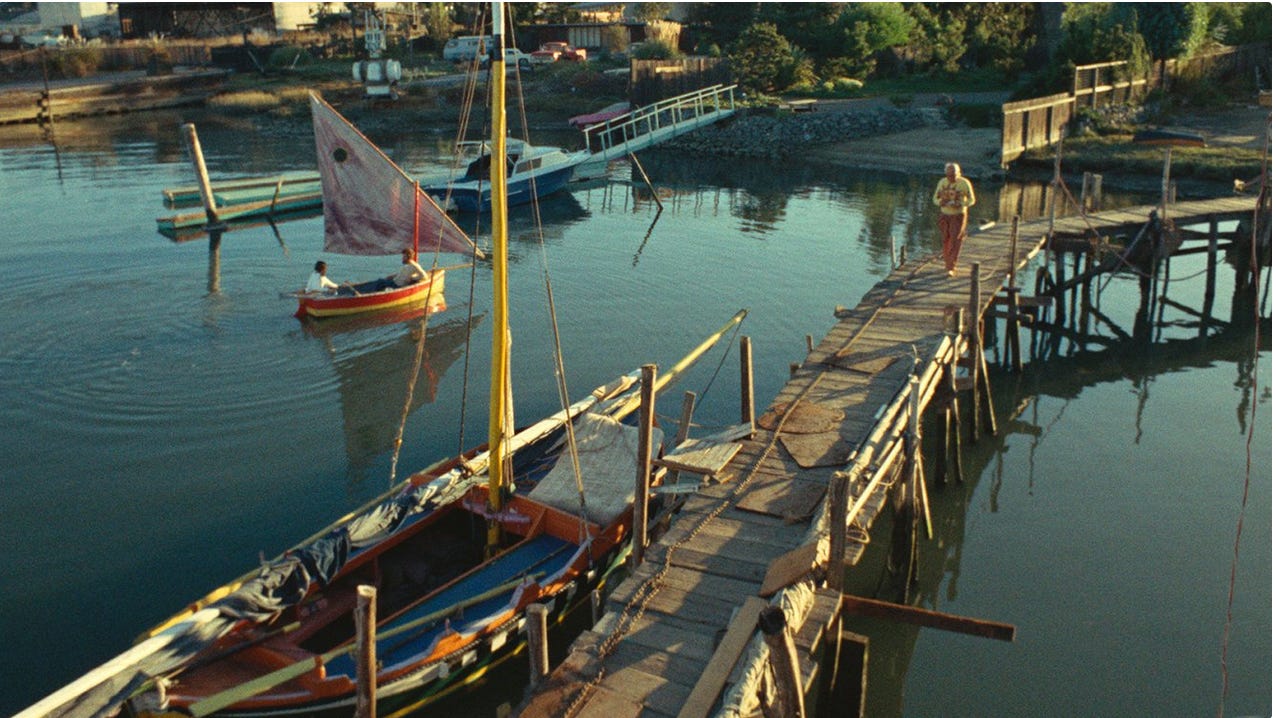
Those days I didn’t have much going on. I had recently been laid off from my job in San Francisco. I occasionally crewed on boats for the little bit of money I needed to live this simple life. Most days I would wake up slowly. There’s no rush on the water. I would open my stove to stoke the little fire, make my bed and convert it back into a bench. Move into the galley to make coffee. Place my pot in the green copper sink and use the hand pump to fill it. Place the coffee on the burner and walk to the stern to open the boat up to catch the light morning breeze. I would usually see a friend coming up or down the docks. We would briefly chat, catch up on the news from the previous day. The town gossip. Coffee done, the friend on their way.
Sometimes I would take my coffee up to the flybridge and watch the clang of the masts and wind on the water. Coffee without the rush is a thing to savor. I even knew it then.
I would ride my old Raleigh over to Mill Valley to see what there was to see. Visit friends at their woodworking shops and art studios. Most nights I would row my small dinghy to a large old ferry boat stuck in the mud a few docks away, SS Vallejo. This massive structure was built in the late 19th century and had many alterations over the years. I was told the previous tenants had been Jean Varda, Gordon Ford, and Alan Watts. It was also a meeting spot for Jack Kerouac, Allen Ginsberg, Maya Angelou, Timothy Leary, Ruth Asawa, and Gary Snyder.


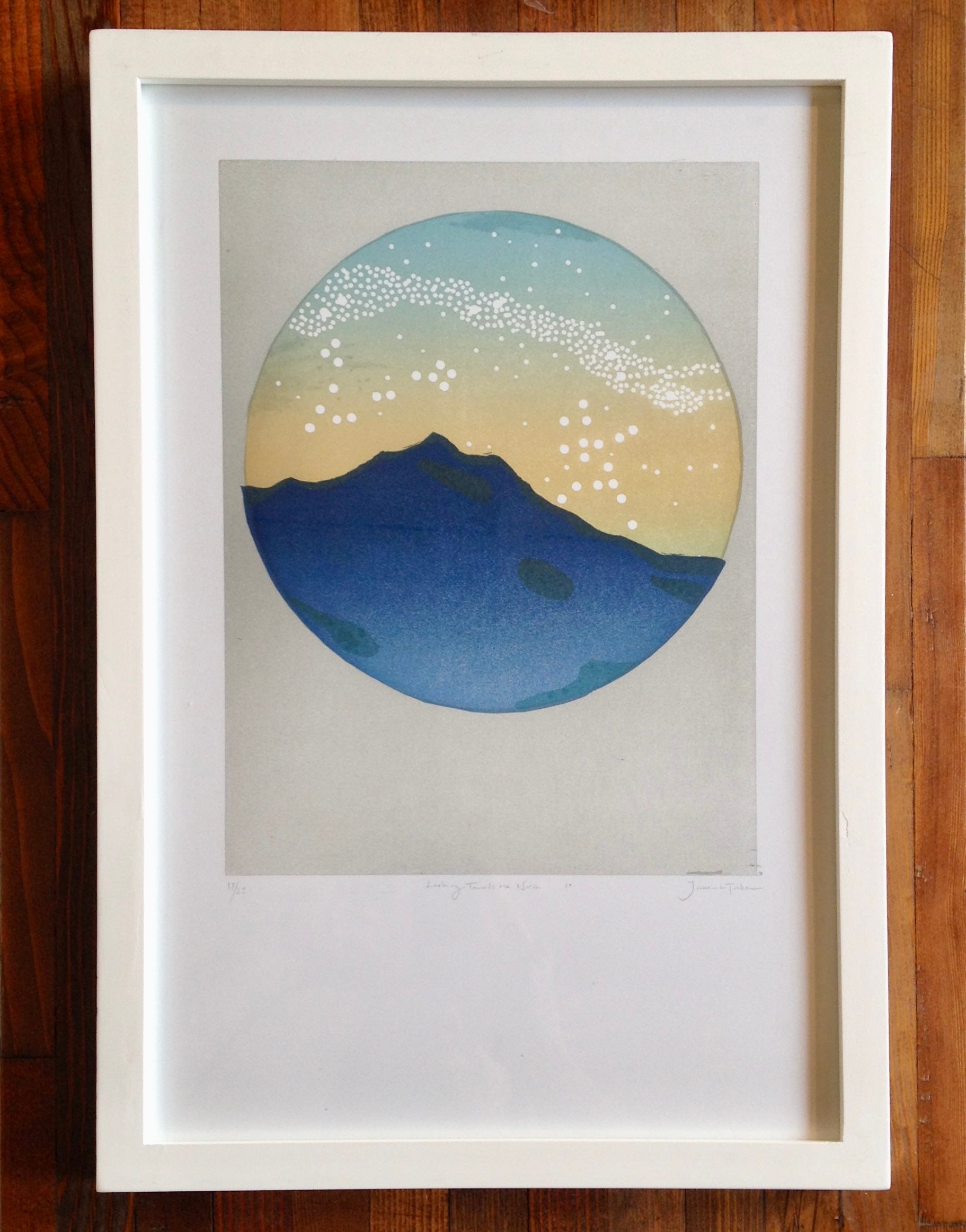
I would go up to the room where Watts once lived. It was the former pilot house on the very top of the boat. It had a floor to ceiling round window looking northwest towards Mount Tam. The sunsets from that room were the highlight of my days then.
We would gather for dinner down below. The boat had a long galley down one side, a long serving table. This deck had originally carried train cars across the bay. It was a large space which split the main train deck in half. All the carpentry was hand-hewn and most was painted into some psychedelic hippie dream world. A full-size Egyptian sarcophagus that held the ashes of a cat. The dinners were filled with friends, reciting poetry, playing music, and finally a pretty tipsy row back home.
That large round window in Alan Watts’ old room overlooking Mount Tam became a print. The tule reeds of the bay, distant islands, the light on the water, and the magnificent shifting color of those sunsets still grab hold of me and show up on the press through me.
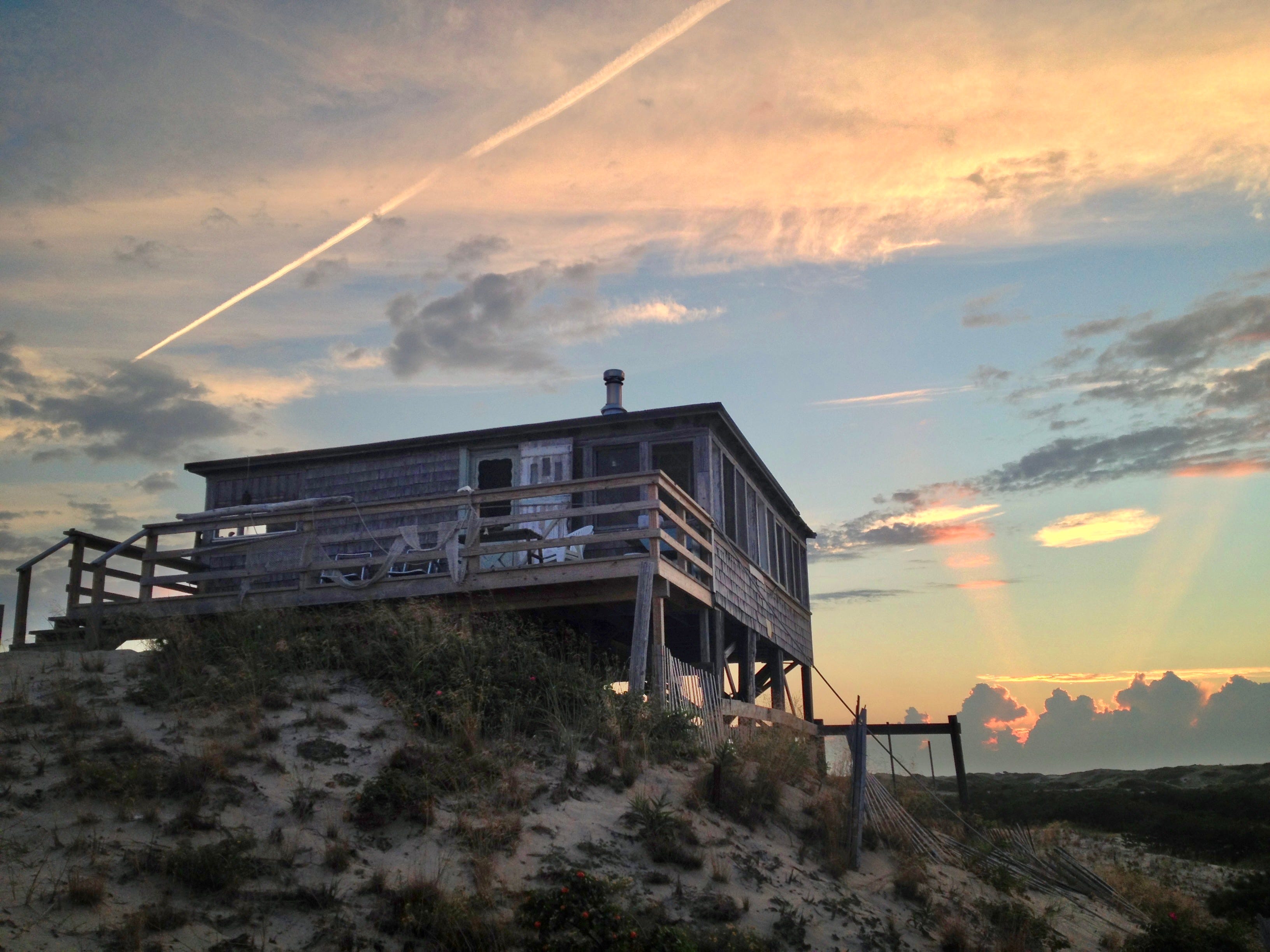
I was still living on the Holy Family when the letter arrived. I had applied to the Outer Cape Artists in Residence Consortium on a whim, not expecting much. They said yes. Two weeks in the Ray Welles dune shack on the Cape Cod National Seashore in Provincetown, Massachusetts.
These shacks started as cabins built by the U.S. Life-Saving Service to house men who would look out for shipwrecks along Cape Cod’s treacherous coastline. After a canal was dug most ships avoided the coast and the shacks were taken over by residents, artists, and writers of the Cape as summer dwellings. More structures in the dunes were added over the years from what could be hauled out on the ever shifting sand roads.
My first encounter with the dune shacks was on Art’s Dune Tours with my grandmother on a summer trip to Provincetown when I was about twelve. I remember the shacks jutting out of the sand hills. Colorful lobster pot buoys hanging outside their doors. Massive quahog clamshells lining the paths up to the entrances. It seemed like a place where fishermen and mermaids would gather. A total escape from the treacherous world. My child mind was enchanted.
Fifteen years later I was riding in Art’s Dune Tours truck again, being dropped off at the Ray Welles Cabin. This was the exact cabin I remembered being awestruck by as a kid. High on a dune, it overlooks the sand road and the sea. Cedar shakes covering the sides. A fishing net draped deck wraps around three sides of the shack. A composting outhouse a short distance away. Rosehips, poverty grass, and beach peas dotted the dunes and held them tight as the Atlantic wind would whip the sand away in the afternoon breeze. The squeak of terns in the distance. Stepping inside the cabin I could see it was made up of several smaller cabins fitted together over the many years. A small kitchen with cast iron pots hanging on the wall. Two bedrooms, an inner and outer. The outer being cooler with the big screened windows facing the ocean and catching the cool breeze. It was chilly at night. There was an old woodstove with the side castings of a man pointing to the mountains with a woman in his arms. With few trees in the dunes, I’d keep warm burning driftwood.


The residency was not a period of producing work. I walked along the beach as far as I could most days. I would find seaweed, shells of all kinds, skeletons of unknown sea creatures. With miles and miles of parabolic sand dunes seeing another person was a rare treat. One day I saw a park ranger on an atv studying Piping Plover hatchlings. Occasionally I would stumble upon another dune shack, they dotted the dunes. Some in better shape than others but all of them unique in ways only a makeshift builder could amalgamate over the years of washed up debris and salvaged windows. Like my life on the water, I followed a routine. Pumping water from the well before it got to hot. Breakfast, usually oatmeal. Then a morning walk over the dunes. I stared at the sea a lot. I thought about how far I had come from taking those dune tours with my grandmother. Sitting on the sand bank, thinking, staring out to sea, I was absorbing. Drinking it all in. The salt-sprayed breeze. The sound of it in the long sharp dune grasses. The isolation. Letting it all soak down into my marrow. When I look at my work now I can see where it springs to the surface.
In 2019 I released “Hold This Close,” a collection of poetry and artwork published out of my shop, The Aesthetic Union. It was the first book I had ever made. I had been writing poetry for a few years before that, starting in 2017 after my grandmother passed away. Writing was one of the only ways I could cope with the loss of her. Writing all those memories down was not enough. I needed to send them out into the world. I never studied poetry but I loved reading it, and writing it seemed to flow. First I shared my poems on Instagram. I was afraid of being that vulnerable on that platform, but I thought, if people didn’t like them they didn’t have to read them. I started a weekly poetry reading, reading what I had been working on alongside poems that inspired me. Quite a few poems came from that, and they were well received. Because I owned the print shop, I decided to publish a book of them. A small edition with a lot of attention to detail. The paper, the size, the font, the binding — everything had a specific reason behind it. Because of the quality over quantity, I knew it was something a publisher wouldn’t be able to do, so we made it all ourselves in house.


Hold This Close quickly sold out of the first 100 copies. I made another edition. It sold out. I increased the edition and made another. It sold out. Finally the fourth edition of 1,000 copies sold out in less than a month. With the sale of my shop the book is now out of print, and I don’t know when, or if, it will ever return.
The fallow period before that book had been thirty-five years. It was being seeded as I worked with my grandmother planting seedling Christmas trees on the tree farm she owned. It grew as we dug for clams on the Cape in the summer and cooked them in the parking lot of our motel on a small Weber grill. It blossomed as I said goodbye to my grandmother on the phone as she lay in her bed dying. I was told she smiled when she heard my voice. She passed that same day.
My hands are now covered in the fragrant smell of fava leaves. I’ll make pesto from these shoots. The air has gotten warm. I can tell the day will get warmer — that feeling you get when you’ve lived in one place long enough to start sensing the little changes. I wonder how this landscape, this view, this coast will sink its way into my bones and spring forth next.
I’m so interested in the idea of what is fallow and especially what is illegible I guess. I often feel like I’m wanting to play with the timeline of punctuated nows and long meandering moments of what is fallow.
Lovely to reminisce with you through this post, James. We still have our Vallejo circle window print hanging on the wall in our home in Oakland. I look forward to seeing where life takes you next! ✨